
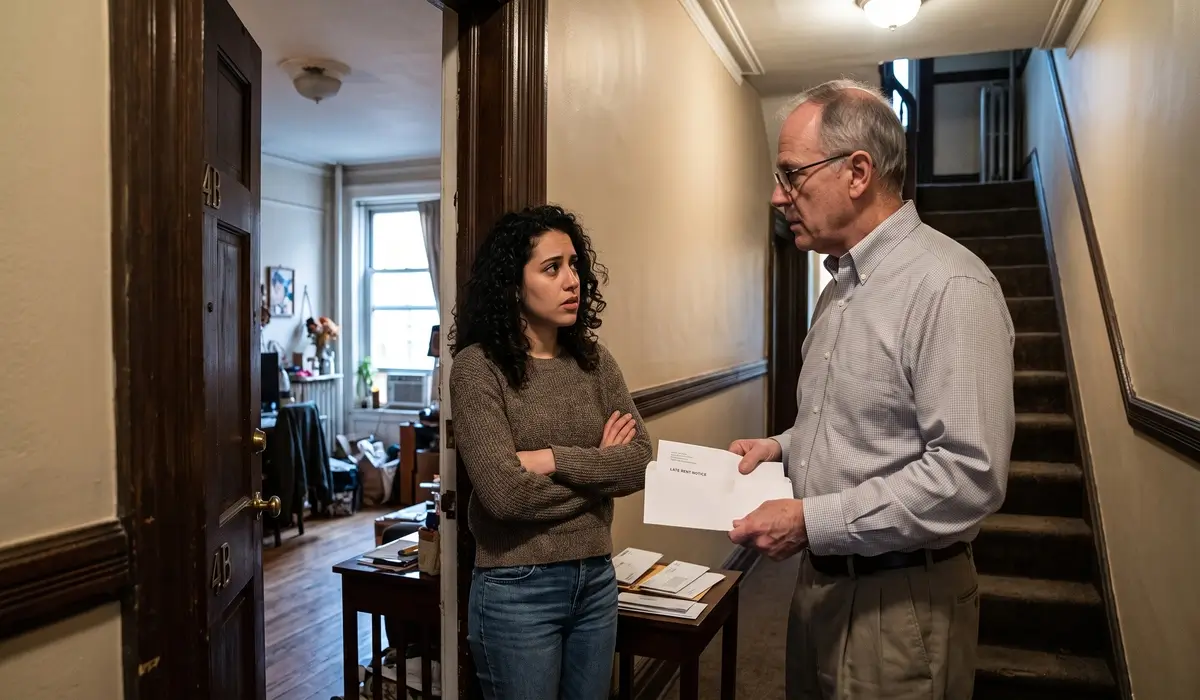
Most lease disputes in New York City don't start as disputes at all. They start as a closed maintenance ticket nobody verified, an occupant who moved in quietly, or a payment that's always a few days behind but never quite late enough to flag.
PMI Waypoint spends a lot of time helping owners spot these signals before a tenant relationship turns formal. The pattern is almost always the same: something small got noticed, then got excused, then got forgotten until it wasn't small anymore.
Key Takeaways
- Rental problems that look minor at first often develop into serious legal and financial situations.
- Late payments excused without documentation tend to repeat and grow harder to resolve.
- Screening gaps at move-in frequently surface as bigger issues months into a lease.
- Delayed maintenance requests commonly turn manageable fixes into expensive repairs.
- Consistent oversight catches these warning signs while they can still be addressed easily.
1. Late Payments That Never Get a Paper Trail
A missed rent payment is easy to excuse the first time it happens. Owners give tenants the benefit of the doubt after the first missed date, then again after a second, and by the time the pattern is undeniable, months of unpaid rent have often piled up.
New York has specific procedural steps landlords must follow before removing a tenant, and any gaps in early documentation can delay a case considerably. A consistent, repeatable process protects owners far better than relying on how a given tenant "usually" behaves.
- Send written notice the moment a due date passes, not a verbal reminder or a text.
- Record every missed payment, partial payment, and promise to pay, each with a date attached.
- Apply the same notice timeline to every tenant, without exceptions based on how long they've lived there.
- Escalate to formal legal notice once a defined threshold, such as two missed payments, has been reached.
Owners who want a clearer picture of what protection actually involves can review PMI Waypoint's eviction protection overview built specifically for New York landlords.
2. Lease Violations That Feel Too Small to Address
An unregistered pet. An extra occupant who was never mentioned. A repeated parking or noise complaint from a neighbor. None of these feel urgent when they happen once, but every violation left unaddressed makes the next one easier for a tenant to justify.
- Pets kept without notice or an updated deposit arrangement.
- Guests who quietly transition into long-term residents.
- Recurring noise or parking complaints that never get a formal response.
- Unauthorized changes made to the unit without approval.
The scale of this pattern shows up in national numbers too. Stateline's tracking of eviction filings found landlords filed 1.23 million eviction cases in 2025, and a meaningful share of those disputes started with a violation this minor. A structured, documented response process gives owners a way to handle these situations the same way every time.
3. Maintenance Requests That Get Pushed Back Repeatedly
A repair request that sits for weeks rarely stays a small problem. What starts as an easy fix often becomes something structural once it's been ignored long enough, and in a dense city like New York, delayed repairs can affect neighboring units too.
| Issue Reported | What Happens If It Sits |
|---|---|
| Water stain on the ceiling | Drywall softens, mold begins spreading behind the surface |
| Weak air conditioning in early summer | Unit fails entirely during a heat wave |
| Running toilet or dripping faucet | Utility bills climb, flooring or cabinetry warps |
Data from the Lessen 2025 Repair and Maintenance Benchmark Report, which reviewed more than 680,000 work orders industry-wide, found that general maintenance requests took a median of 14.8 days to close. That kind of delay gives a small issue plenty of time to grow, and it can weaken an owner's position if a habitability dispute ever reaches housing court.
4. Screening Decisions That Come Back Around Later
Many of the problems owners deal with later actually trace back to decisions made before a tenant ever signed a lease. A rushed application review or a skipped credit check can place a difficult tenant in a unit, and the difficulty tends to surface gradually, often months in, when it's much harder to unwind.
A thorough screening process that verifies income, rental history, and credit information reduces the odds of placing a tenant who generates repeated issues down the line. Reviewing tools like credit checks for landlords gives owners a clearer sense of what a complete screening process should include before a lease is ever offered.
5. Signs It Might Be Time to Bring in Outside Help
Some owners reach a point where managing solo starts costing more time and money than it saves. A few signals tend to show up together.
- Vacancies are taking longer to fill than they used to.
- Maintenance requests are piling up faster than they can be resolved.
- Rent collection has become inconsistent month to month.
- Tenant communication feels reactive instead of organized.
Owners noticing several of these at once can review the signs you need a manager for a clearer sense of whether outside support makes sense right now.
6. Managing Without a Consistent Tracking System
Owners handling a property on their own often don't notice a problem until it's already serious, mostly because there's no reliable record of what's happening across the building.
- Payment history scattered across notebooks, apps, or text threads.
- Maintenance calls taken by phone with nothing written down afterward.
- Lease violations noticed in passing but never logged anywhere.
- Communication split across calls, texts, and emails with no single source of truth.
PMI Waypoint helps owners close this gap through structured tracking of payments, maintenance, and lease compliance. Learning more about what full-service management actually includes is often the clearest way to see where a self-managed system is falling short. A free rental analysis can also highlight gaps an owner might not have noticed yet, and reviewing dependable rent collection support rounds out the picture for owners weighing whether to keep managing solo.
FAQs about Tenant Issue Escalation in New York City, NY
How long should I wait before treating a repeated late payment as a real problem?
Two consecutive late payments is generally a reasonable point to start formal documentation. Waiting longer than that makes it harder to establish a clear pattern if the situation eventually requires legal action.
Can a tenant claim retaliation if I enforce a lease violation after ignoring it for months?
It's possible, especially if enforcement follows a complaint the tenant made. Document the violation thoroughly and apply your policy consistently across all tenants to reduce that risk significantly.
Is a verbal agreement to fix a lease violation enough, or should it be written?
Written is always safer. Verbal agreements are difficult to enforce later and leave no record if the tenant disputes what was actually agreed to during the conversation.
What's a reasonable response time for a maintenance request in a New York City rental?
Non-emergency requests are typically addressed within a few business days, while anything affecting heat, water, or safety needs same-day attention under New York housing codes.
Should I treat a long-term tenant's violations differently than a new tenant's?
Consistency matters more than tenure here. Document and address violations the same way regardless of how long someone has lived there, since uneven enforcement can complicate things later.
The Real Cost of Waiting in a City Like This One
Every landlord eventually faces a moment where a small decision- ignore it or address it now- ends up shaping the next six months of a tenancy. New York City just moves fast enough that those moments arrive more often and with less warning than owners expect.
PMI Waypoint helps owners recognize those moments before they become expensive, backed by screening, documentation, and follow-through that doesn't depend on catching everything manually. Connect with our team if a current situation already needs formal attention.